Recipes · 2026-10-08 · 3 min read
Udon Carbonara: A Japanese-Inspired Comfort Dinner
Chewy udon with a peppery egg-and-cheese sauce and crisp pancetta, including tips for managing heat and loosening the sauce.
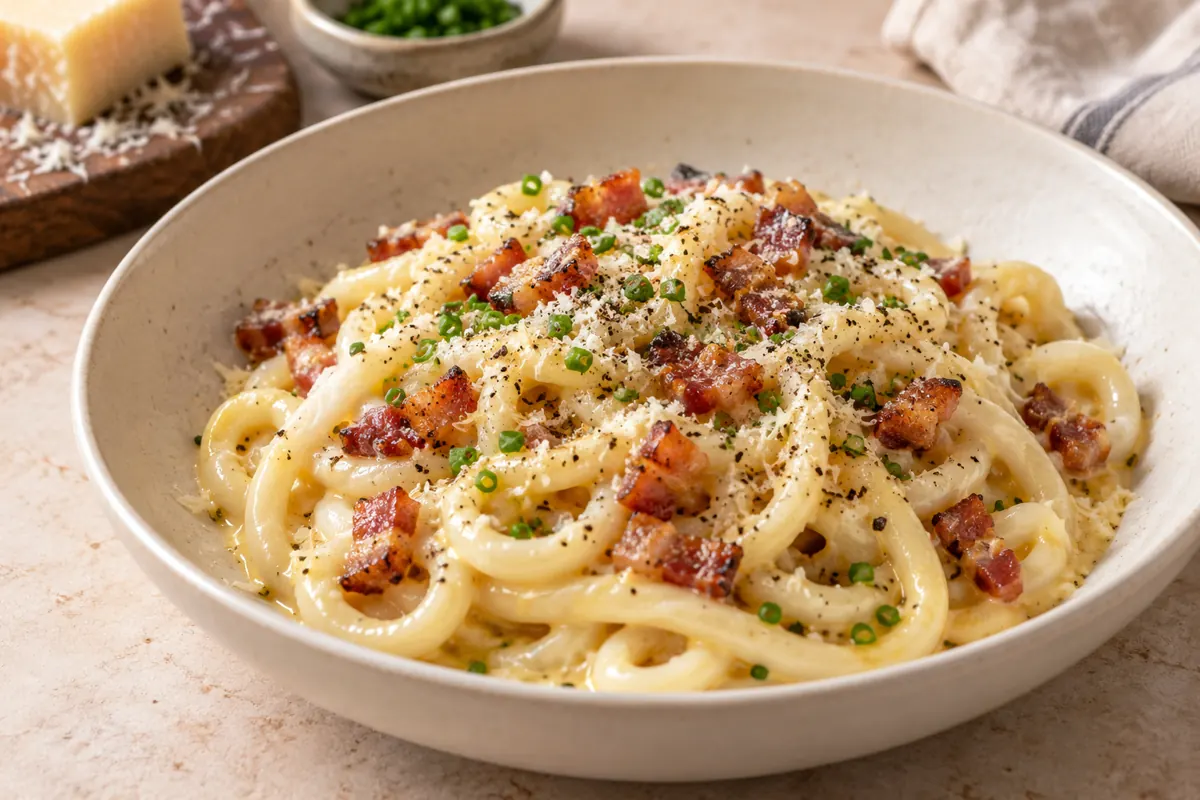
Udon gives a familiar creamy, peppery dinner a different bite. The noodles are thick enough to carry the sauce, while a small portion of crisp pancetta brings contrast.
The idea takes inspiration from Masako Morishita's udon carbonara in Food & Wine. Our independently written variation uses pancetta and ordinary pantry ingredients rather than recreating the chef's recipe.
Ingredients
Serves 2. Allow about 25 minutes, depending on the noodle packet's instructions.
- 400 g cooked fresh or frozen udon noodles
- 80 g pancetta, cut into small pieces
- 1 pasteurized whole egg
- 2 pasteurized egg yolks
- 50 g finely grated parmesan, plus a little to serve
- 1/2 teaspoon freshly ground black pepper, or to taste
- 2 tablespoons finely chopped chives
- Approximately 100 ml reserved hot noodle cooking water
- Salt, only if needed
Use pasteurized eggs because the sauce is gently warmed and may not become fully cooked. The FDA recommends pasteurized eggs for dishes served with raw or undercooked egg.
Check whether your udon weight refers to cooked noodles: dried noodles are not a gram-for-gram substitute.
Crisp the pancetta
Put the pancetta in a wide frying pan over medium heat. Cook until browned and crisp, stirring as the fat renders. Remove a spoonful for the final topping.
Leave roughly a tablespoon of fat in the pan and remove any excess. Take the pan off the heat while you cook the noodles.
Prepare the sauce
Whisk the pasteurized egg and yolks with the parmesan and black pepper in a bowl. The mixture will be thick.
Set out the serving bowls now. Once the noodles meet the sauce, you want to finish and serve without another round of preparation.
Cook and loosen the noodles
Cook or warm the udon according to its packet, separating the strands gently. Before draining, reserve some hot cooking water.
Add the drained noodles to the pancetta pan and toss. If the pan is still fiercely hot, wait briefly before adding the egg mixture. You are aiming for retained warmth rather than an active frying temperature.
Bring everything together
Pour in the egg-and-cheese mixture and toss continuously off the heat. Add the reserved water a tablespoon at a time until the sauce coats the strands.
If the noodles are too cool for the sauce to come together, use the lowest heat briefly while tossing, then remove the pan again. Avoid leaving it still over the burner.
A tight, clumpy sauce usually needs a little more water. A pan that is too hot can turn the eggs into visible curds, so make small adjustments.
Finish and serve
Add the chives and reserved pancetta. Taste before adding salt because both cheese and pancetta contribute it.
Serve immediately with extra pepper. A simple vegetable side, such as Green Beans with Tahini, makes a useful contrast.
This dish is best eaten as soon as it is made; the sauce thickens as the noodles stand.
Recipe note: this variation has not been kitchen-tested by Pixeld Food. Cover: AI-generated serving illustration.